SOLD OUT
Learn what goes on a bóveda, the sacred white table used in Espiritismo to honor ancestors and spirits. Discover the essentials of water, light, and intention.
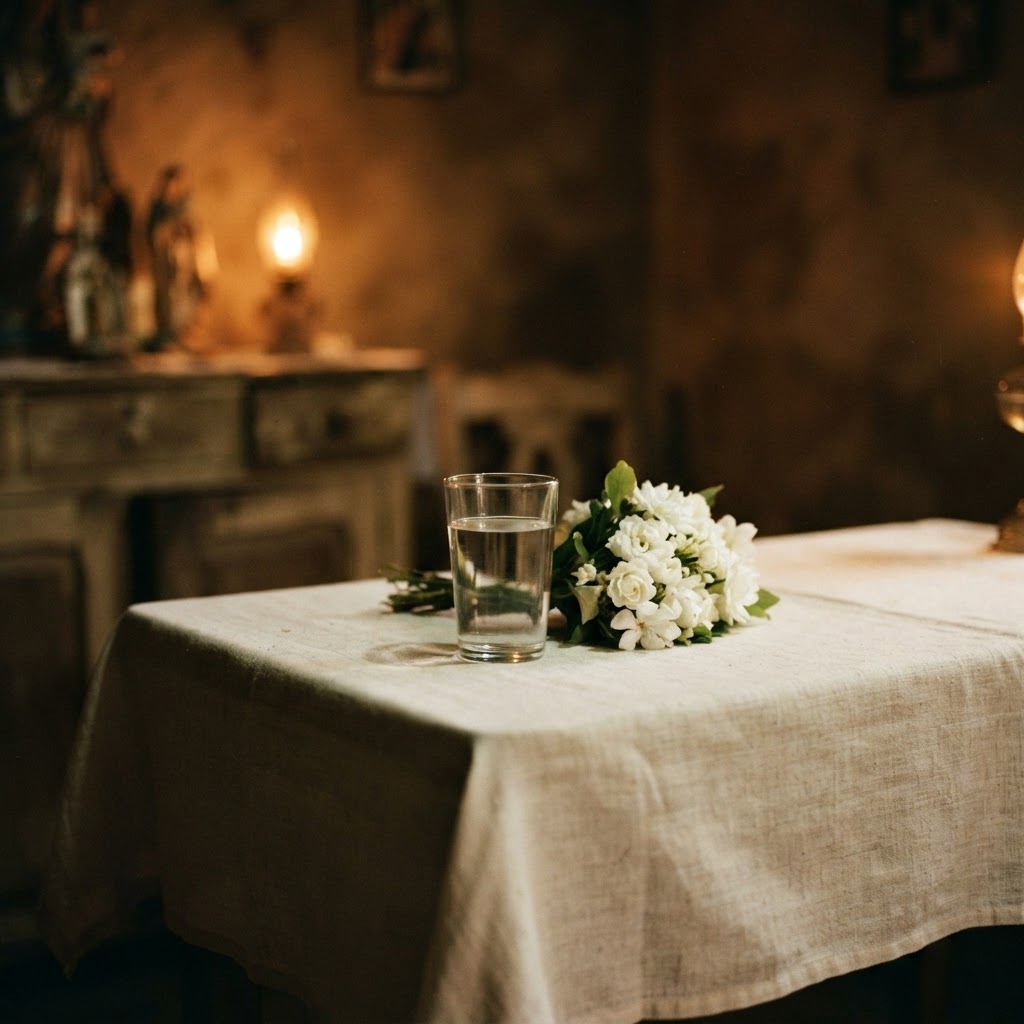
For those walking the path of Espiritismo in the Caribbean traditions, learning what goes on a bóveda is a foundational step in building a sacred space for your ancestors. A bóveda, or white table, serves as a focal point for spiritual connection, providing a dedicated area to honor the spirits, guides, and loved ones who walk beside us. It is a place of peace, clarity, and intentionality.
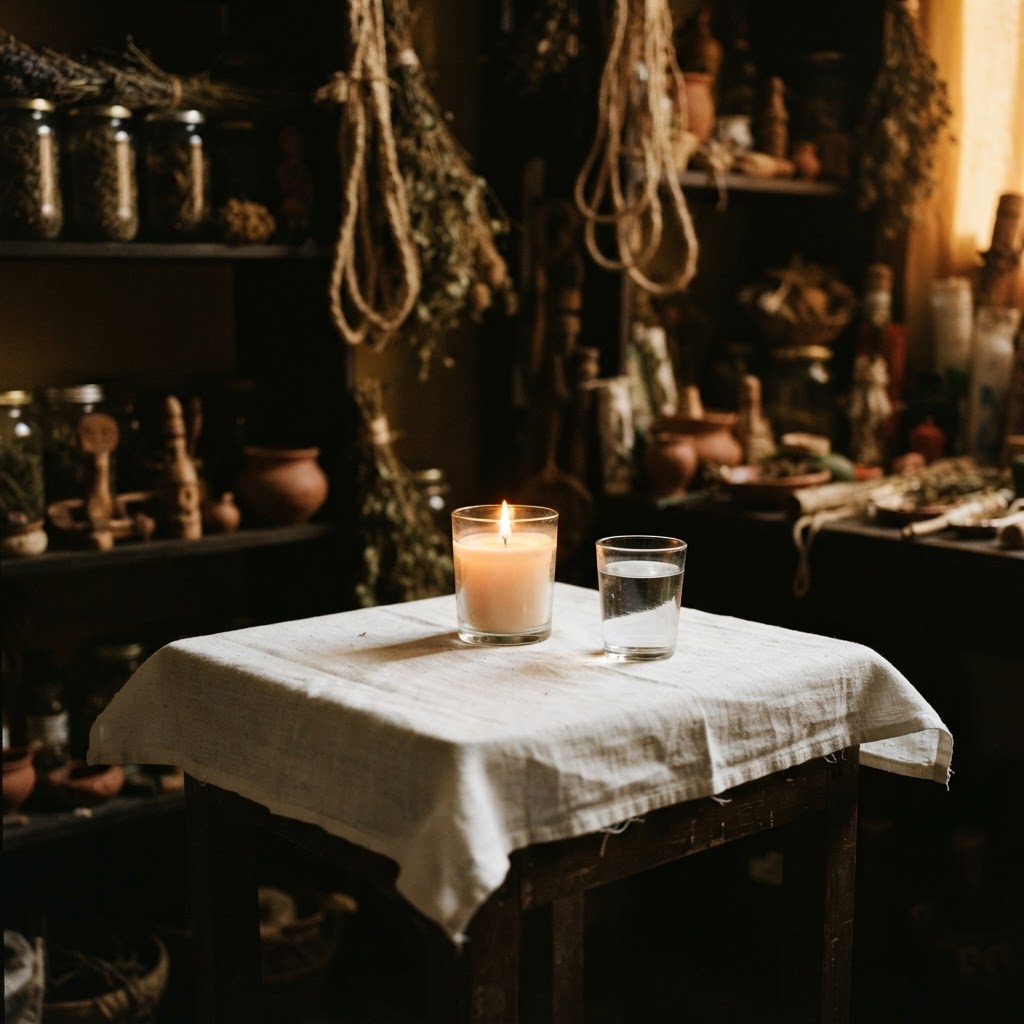
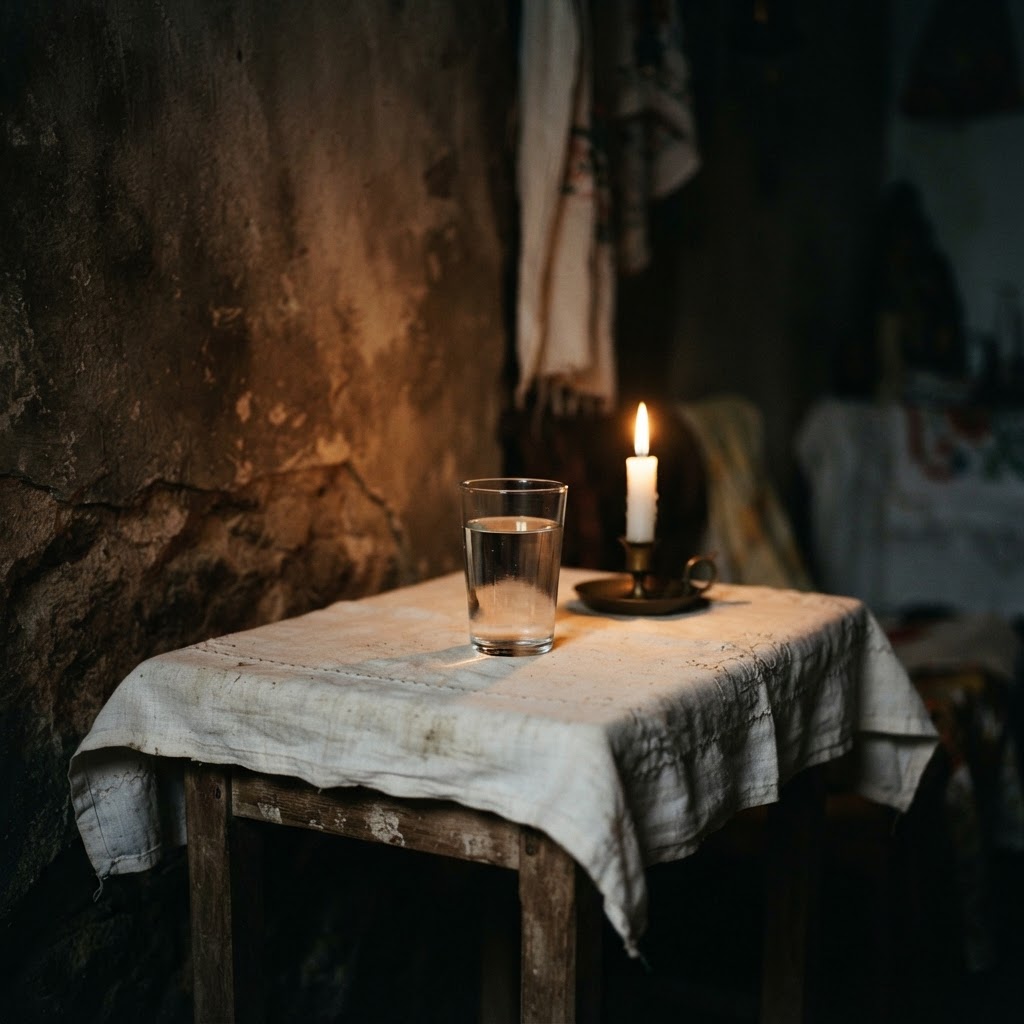
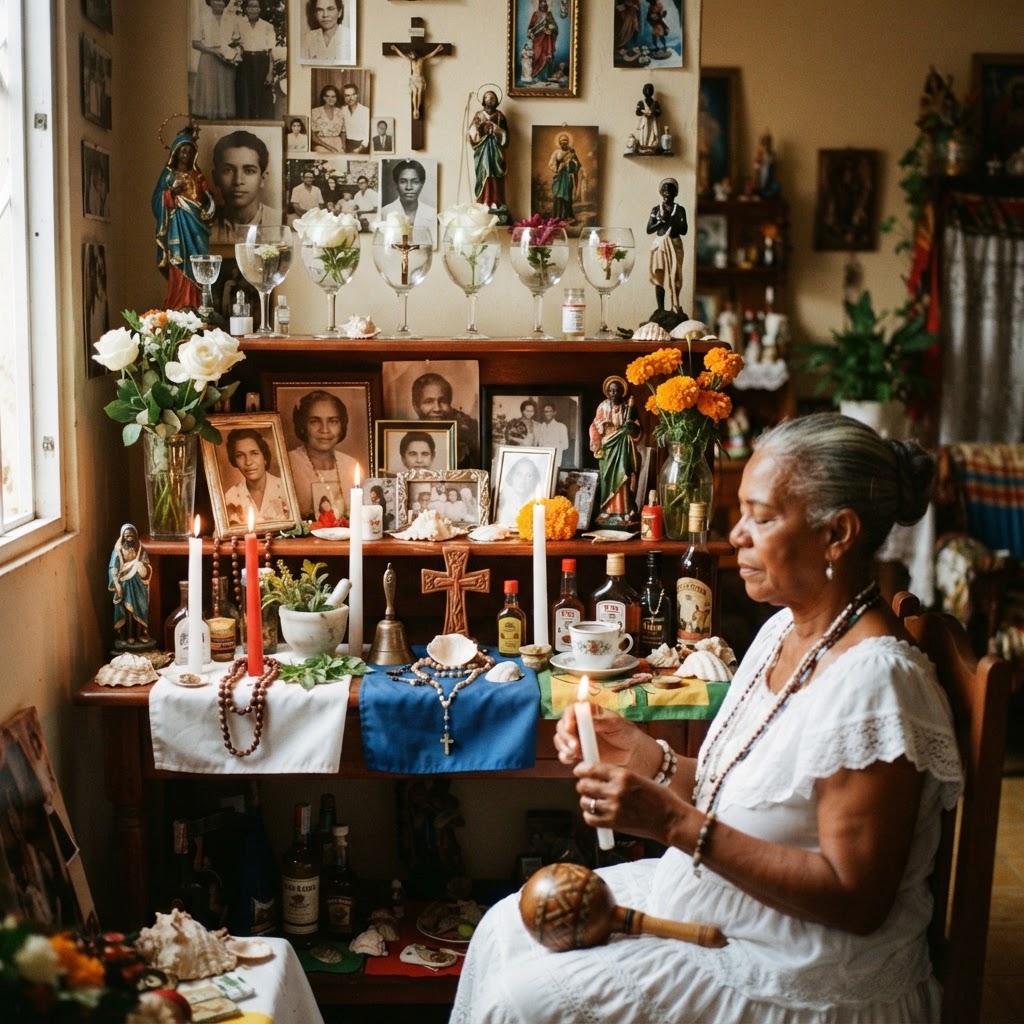
A bóveda is typically a small table covered with a clean white cloth, serving as an altar for spiritual communication. It generally features glasses of water, a candle, fresh flowers, and specific mementos that represent the ancestral spirits and guides that an individual is working with in their personal practice.
As you begin your journey, it is important to remember that the practice of maintaining a bóveda is deeply personal. While certain elements are considered essential, the specific arrangement often depends on the guidance you receive from your elders or teachers. Traditions vary significantly between lineages and houses, and there is no single universal way to set up your altar. The most important aspect is the sincerity and reverence you bring to the space.
At the very heart of any bóveda are water and light. These are the two non-negotiable foundations of the spiritual work performed at the table. Water is seen as a conduit for spiritual energy; it is a neutral, receptive substance that can absorb, hold, and transmit vibrations. When you place glasses of water on the table, you are creating a vessel through which your spirits can interact with the environment of your home.
Light, most commonly represented by a white candle, acts as a beacon. Just as a lighthouse guides ships to safety, the candle flame provides a clear path for your ancestors and guides to approach. It brings warmth, focus, and illumination to the spiritual work, signaling that the space is active and open for communication or prayer. In Espiritismo 101, you will learn that the flame represents the purity of intent and the clarity of the connection between the earthly and the spirit realms.
Related tools


Every piece ships unconsecrated so your elder can prepare it. Free US shipping over $95 · 14-day returns.
Beyond the basics of water and light, many people add flowers to their bóveda. Flowers are not just decorative; they are living offerings that bring natural energy and beauty to the space. Fresh, white flowers are common because they signify peace and purity, but depending on the specific guide being honored, different colors or types of flowers might be recommended by a teacher. It is vital to remove flowers as soon as they begin to wilt, as the energy of a living altar is best maintained with fresh, vibrant offerings.
Personal items and photographs are also frequently placed on the table. These objects serve as anchors for the memory and essence of those who have passed on. However, these should always be handled with care and respect. If you are placing photographs on your bóveda, ensure they are treated as sacred items, not merely as decor. The objects you choose to place there should reflect the specific guides and ancestors you are honoring. To learn more about identifying who walks with you, visit our Spirit-Guide Profiles section.
The environment surrounding your bóveda is just as important as the objects on it. Because the table acts as a point of spiritual contact, it is traditionally kept in a quiet, clean, and respectful area of the home. This does not mean the space needs to be hidden, but it should be a place where you can sit, pray, and reflect without unnecessary noise or distraction. Keeping the area clean and tidy is an act of discipline that shows reverence to the spirits.
Before you begin
What to ask before any ritual work begins — and what only an initiated elder can answer.
No spam. Unsubscribe anytime.
Everything we send is a starting point. Ritual work belongs in the hands of an initiated elder — find yours before you begin.
Remember that the bóveda is a dynamic reflection of your own spiritual growth. As you progress in your practice, the way you arrange your table may evolve. What you place on it today might change as you develop a deeper understanding of your guides and their needs. Always lean on the teachings of your elders, as they possess the lineage-specific knowledge necessary to navigate the nuances of these traditions. For further guidance on maintaining your altar, you can explore our Learn page to see foundational materials.
Written by
SanteriaGuide
Initiated practitioner and writer at SanteriaGuide. Articles are reviewed by elders of the house before publication.
Before you decide
From the community
“The irofá arrived ready for work — solid, balanced, exactly as my babalawo wanted.”
Omar B. · Union City, NJ · Verified buyer
“Used the mazo in my iyawó year. It held up through everything.”
Lisette F. · Tampa, FL · Verified buyer
“Every knot tight, every bead correct. These people know the tradition.”
Rafael O. · Bronx, NY · Verified buyer
Ends soon
Code BLACKFRIDAY25
Orders of $150 or more take the discount — or save 15% from $100, no code needed.
Shop the saleAuthenticity guaranteed
Handmade by initiated Santeros using traditional materials.
Fast, careful shipping
Ships next business day, wrapped for the altar.
30-day returns
Unused, unconsecrated pieces returned without fuss.
Secure checkout
Encrypted payment, card details never stored.
Related collection · View all 25 pieces
Handmade Orisha elekes — beaded necklaces strung by hand in the sacred colours of the Orisha they belong to, from Eleguá's red and black to Obatalá's white.
Keep reading