SOLD OUT
Unlock the secrets of Espiritismo by understanding the core vocabulary: misa (spiritual service), centro (the house/community), and bóveda (ancestor altar). Learn their distinct roles and how they connect.
Navigating the world of Espiritismo can feel like learning a new language, especially when you first encounter its core practices. Three terms that often cause confusion for newcomers are misa (spiritual), centro, and bóveda. While related and often seen together, they represent distinct aspects of this rich spiritual tradition. Understanding these terms is crucial for anyone looking to deepen their knowledge and practice of Espiritismo.
Espiritismo, rooted in the works of Allan Kardec and deeply woven into the fabric of Afro-Cuban and Caribbean spiritual life, offers a path to spiritual connection and healing through the guidance of spirits. It’s a practice that emphasizes love, charity, and the evolution of the soul. At its heart, Espiritismo is about bridging the material and spiritual worlds with reverence and respect. This article aims to clarify the meanings of misa, centro, and bóveda, how they connect, and why they should not be used interchangeably.
What is a Misa (Espiritual)?
In Espiritismo, a misa (pronounced MEE-sah) is fundamentally a spiritual gathering or service. The word itself means "mass" or "service" in Spanish. In the context of Espiritismo, it refers to a structured session where mediums gather to serve as channels for spiritual communication, healing, and spiritual work. A misa is not just a casual get-together; it's a focused effort to connect with the spirit world for specific purposes.
These purposes can vary widely. A misa might be held to:
A typical misa involves mediums entering a state of spiritual receptivity, often after prayer and invocation. Spirits, particularly benevolent guides, family ancestors, or healing entities, then communicate through the mediums to offer their assistance. The atmosphere is generally one of solemnity, respect, and focused intention. It is important to note that while the term "misa espiritual" is common, sometimes the term "misa" alone is used within the community when the spiritual context is understood.
Types of Misas
Within the broader term "misa," there are specialized forms of gatherings:
These specialized misas highlight the versatility and depth of the practice, demonstrating that a "misa" is not a one-size-fits-all event but can be tailored to specific spiritual needs and objectives.
The term centro (pronounced SEN-troh) refers to the physical space, the spiritual house, or the group or organization where Espiritista activities, including misas, take place. Think of it as the spiritual "center" or "hub" for practitioners. A centro is more than just a building; it often represents the community, the lineage of knowledge, and the collective spiritual work of a particular group of people under the guidance of experienced elders or spiritual leaders.
A centro can range from a dedicated building or room specifically set up for spiritual work to a private home where regular gatherings are held. It is where practitioners come to learn, to receive spiritual assistance, to offer their services as mediums, and to participate in the communal spiritual life. The centro serves as a sanctuary for spiritual connection and a place where the principles of Espiritismo are lived and taught.
The community aspect of a centro is vital. It's where individuals find support, shared understanding, and a sense of belonging within their spiritual journey. Within a centro, different spiritual "lines" or "houses" might operate, each with its own nuances in practice, but all adhering to the core tenets of Espiritismo. The relationships built within a centro are often deep and lasting, fostering a supportive environment for spiritual growth.
Related tools


Every piece ships unconsecrated so your elder can prepare it. Free US shipping over $95 · 14-day returns.
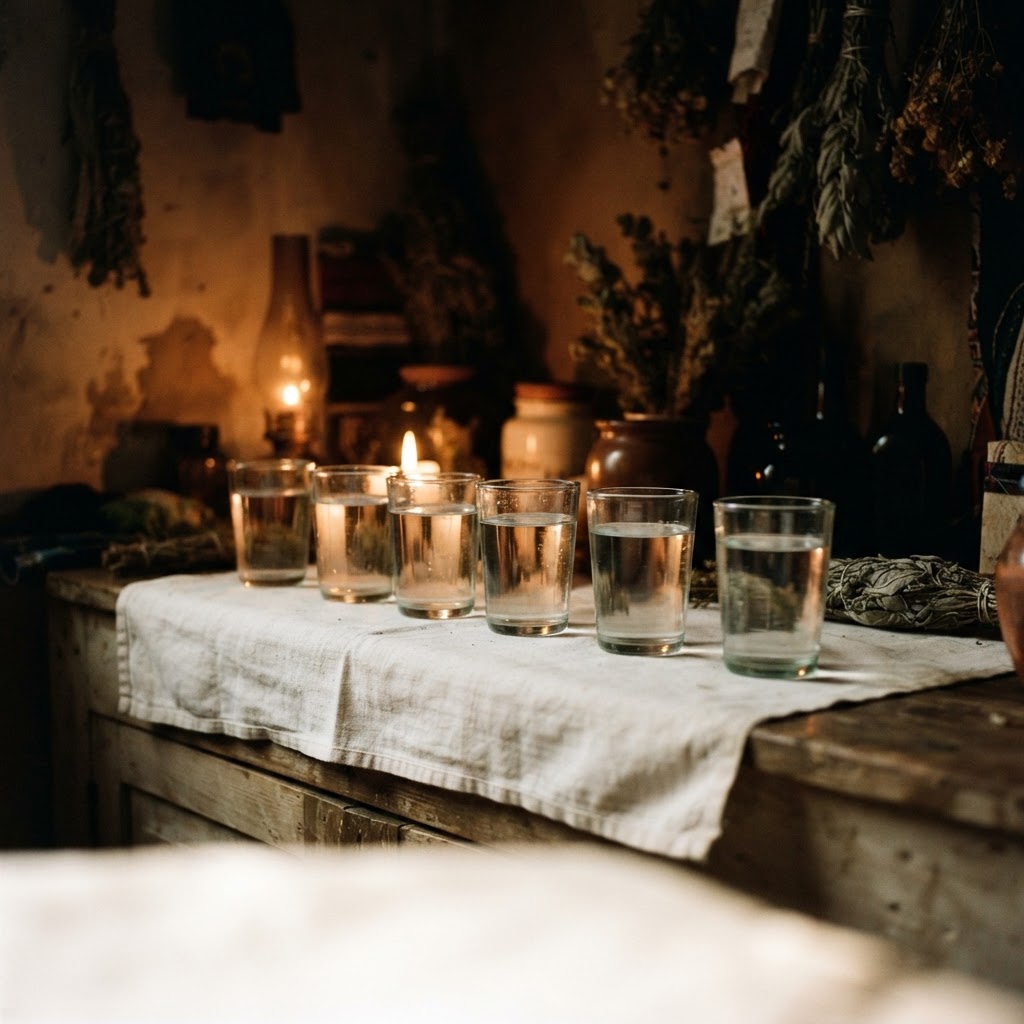
A bóveda (pronounced BO-veh-dah), often referred to as a "bóveda espiritual" or "bóveda de muertos," is a personal spiritual altar dedicated to the ancestors and guiding spirits. It is one of the most recognizable and sacred elements of Espiritismo. The term "bóveda" itself means "vault" or "dome," suggesting a sacred, enclosed space.
Typically, a bóveda is a white, multi-tiered table or altar, often draped in white cloth. Its primary purpose is to serve as a focal point for communicating with, honoring, and receiving blessings from one's ancestral spirits and spiritual guides. It is a place of personal devotion and spiritual connection.
Key elements often found on a bóveda include:
The bóveda is a deeply personal sacred space. It is maintained with care and reverence by the individual. While misas may occur within a centro, the bóveda is typically a private altar within one's home, though it can be present in a centro as well, often for the community to utilize for prayer and connection under the guidance of the elders.
Before you begin
What to ask before any ritual work begins — and what only an initiated elder can answer.
No spam. Unsubscribe anytime.
Everything we send is a starting point. Ritual work belongs in the hands of an initiated elder — find yours before you begin.
These three terms, while distinct, are intrinsically linked within the practice of Espiritismo:
Think of it this way: A community gathers at a centro for a misa to engage with the spirit world. Many practitioners will also maintain a personal bóveda at home, a constant altar that connects them to their spiritual family and supports their spiritual journey, which in turn enhances their participation in the misa at the centro.
Clearing Up Confusion
The most common mistake is using these terms interchangeably. For instance, calling a bóveda a "misa" or referring to a "misa" when you mean the physical building of a "centro" dilutes the specific meaning and reverence of each practice. While a bóveda is a sacred space that facilitates spiritual work, it is not itself the spiritual gathering (misa), nor is it the community center (centro).
Similarly, a "centro" is the house or organization, not the spiritual service (misa) that happens within it. The "misa" is the dynamic spiritual event, the active engagement with the spirits. Each term carries its own weight and significance, and respecting these distinctions is a sign of understanding and reverence for Espiritismo.
Learning this core vocabulary is a fundamental step in appreciating the depth and beauty of Espiritismo. By understanding what a misa, centro, and bóveda truly represent, you open the door to a more profound connection with the spiritual world and the vibrant community that practices it.
For more on Espiritismo, explore our Espiritismo 101 section and learn about the fascinating spirits you might encounter in our Spirit-Guide Profiles. If you're interested in the ancestor altar, dive deeper with our article on the Bóveda.
Written by
SanteriaGuide
Initiated practitioner and writer at SanteriaGuide. Articles are reviewed by elders of the house before publication.
Before you decide
From the community
“The irofá arrived ready for work — solid, balanced, exactly as my babalawo wanted.”
Omar B. · Union City, NJ · Verified buyer
“Used the mazo in my iyawó year. It held up through everything.”
Lisette F. · Tampa, FL · Verified buyer
“Every knot tight, every bead correct. These people know the tradition.”
Rafael O. · Bronx, NY · Verified buyer
Ends soon
Code BLACKFRIDAY25
Orders of $150 or more take the discount — or save 15% from $100, no code needed.
Shop the saleAuthenticity guaranteed
Handmade by initiated Santeros using traditional materials.
Fast, careful shipping
Ships next business day, wrapped for the altar.
30-day returns
Unused, unconsecrated pieces returned without fuss.
Secure checkout
Encrypted payment, card details never stored.
Related collection · View all 4 pieces
Palo Mayombe tools — ritual items for Tata Nkisis and Yayas, made with respect for a tradition rooted in ancestral wisdom and the forces of nature.
Keep reading