SANTERIAGUIDE
$50.00
What does Iború, Iboyá, Ibosheshé mean? Origin, ritual use, and anthropological meaning of a Yorùbá greeting that honors, blesses, and legitimizes the word.

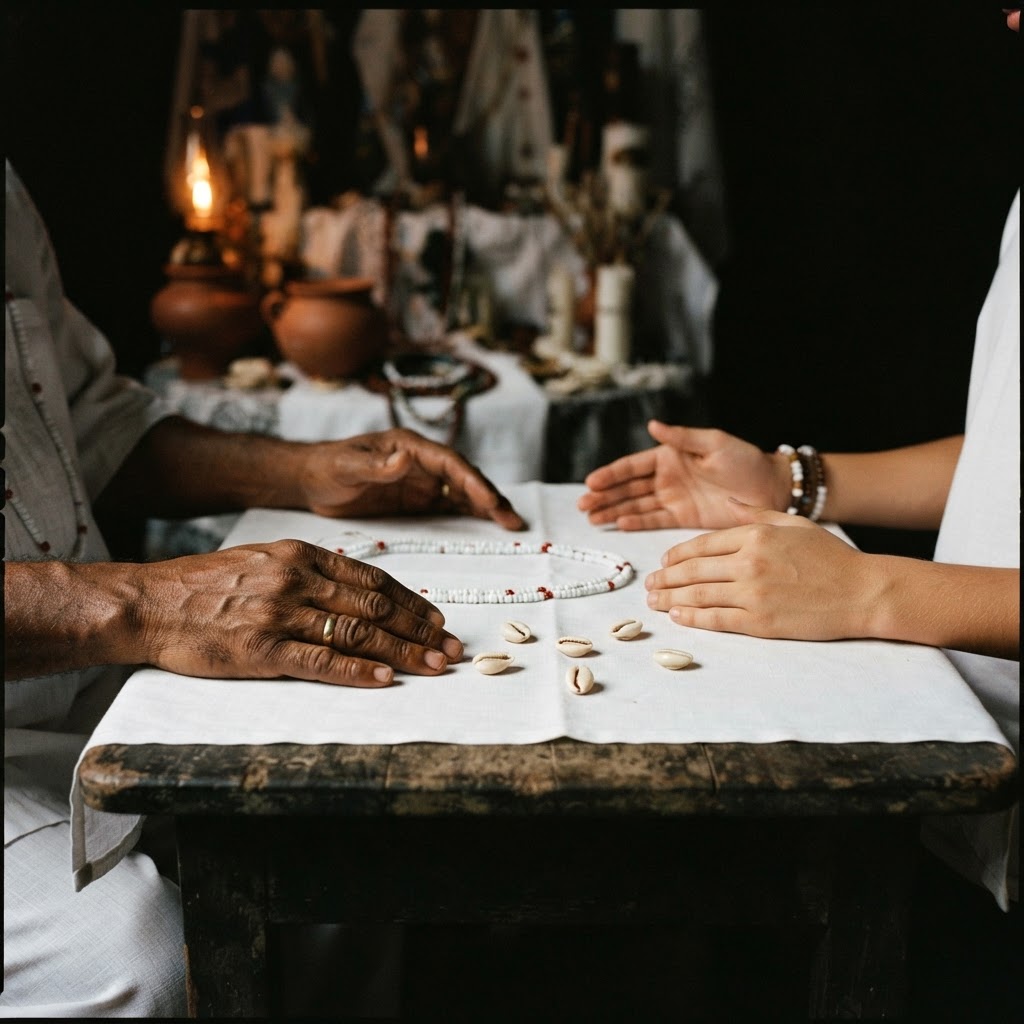
The expression "Iború, Iboyá, Ibosheshé" constitutes one of the most revered liturgical formulas within the Ifá system and the Santería tradition. This trilateral phrase represents much more than a simple blessing: it embodies the quintessence of respect for Orunmila/Orula, the Orisha of divination and guardian of the sacred corpus of Ifá.
Fundamentally, this formula expresses the plea and hope that the offerings presented are favorably received, executed with ritual precision, and that their benefits manifest according to the prescribed destiny. Its pronunciation transcends mere verbalization, becoming an act of spiritual communion with the forces that govern cosmic balance.
In Yorùbá mythology, this phrase evokes the story of the three celestial women who interceded to save Orunmila from cosmic adversities. Each segment of the formula honors one of these protective entities, thus establishing a direct link with the primordial forces that sustain the spiritual universe.
If you feel called
SANTERIAGUIDE

Every piece ships unconsecrated so your elder can prepare it. Free US shipping over $95 · 14-day returns.
The academic interpretation of this expression requires an understanding of its idiomatic nature. Literal, word-for-word translations are insufficient to capture the semantic depth of the full phrase. In a ritual context, its meaning emerges from the conceptual intertwining of its components.
Scholars of Afro-Cuban traditions agree that the semantic power of this formula resides in its gestalt totality, where the emergent meaning significantly surpasses the sum of its constituent parts.
Lucumí vocabulary
The vocabulary behind these articles, explained term by term.
No spam. Unsubscribe anytime.
Everything we send is a starting point. Ritual work belongs in the hands of an initiated elder — find yours before you begin.
Written by
Ali Romero
Initiated practitioner and writer at SanteriaGuide. Articles are reviewed by elders of the house before publication.
Before you decide
From the community
“As an aleyo I was nervous about buying the wrong thing. Their guides made it simple.”
Danielle P. · Atlanta, GA · Verified buyer
“The starter guide answered questions I was too shy to ask my padrino.”
Marcus T. · Chicago, IL · Verified buyer
“Clear explanations, no gatekeeping, and genuinely handmade pieces.”
Sofía G. · Los Angeles, CA · Verified buyer
Ends soon
Code HALLOWEEN20
Shop the saleAuthenticity guaranteed
Handmade by initiated Santeros using traditional materials.
Fast, careful shipping
Ships next business day, wrapped for the altar.
30-day returns
Unused, unconsecrated pieces returned without fuss.
Secure checkout
Encrypted payment, card details never stored.
Keep reading