SOLD OUT
SaleEleguá Laroyé Ilde Bracelet with 4 Variants
Handmade by initiated Santeros · unconsecrated, ready for your elder
1 verified reviews
$25.00$35.00
✦ Free U.S. shipping over $65 · Handmade by initiated devotees · Ships next business day from Texas ✦
Discover everything about Eleguá Orisha: from his colors, numbers, and favorite foods to how to honor the owner of the roads according to Lucumí tradition.
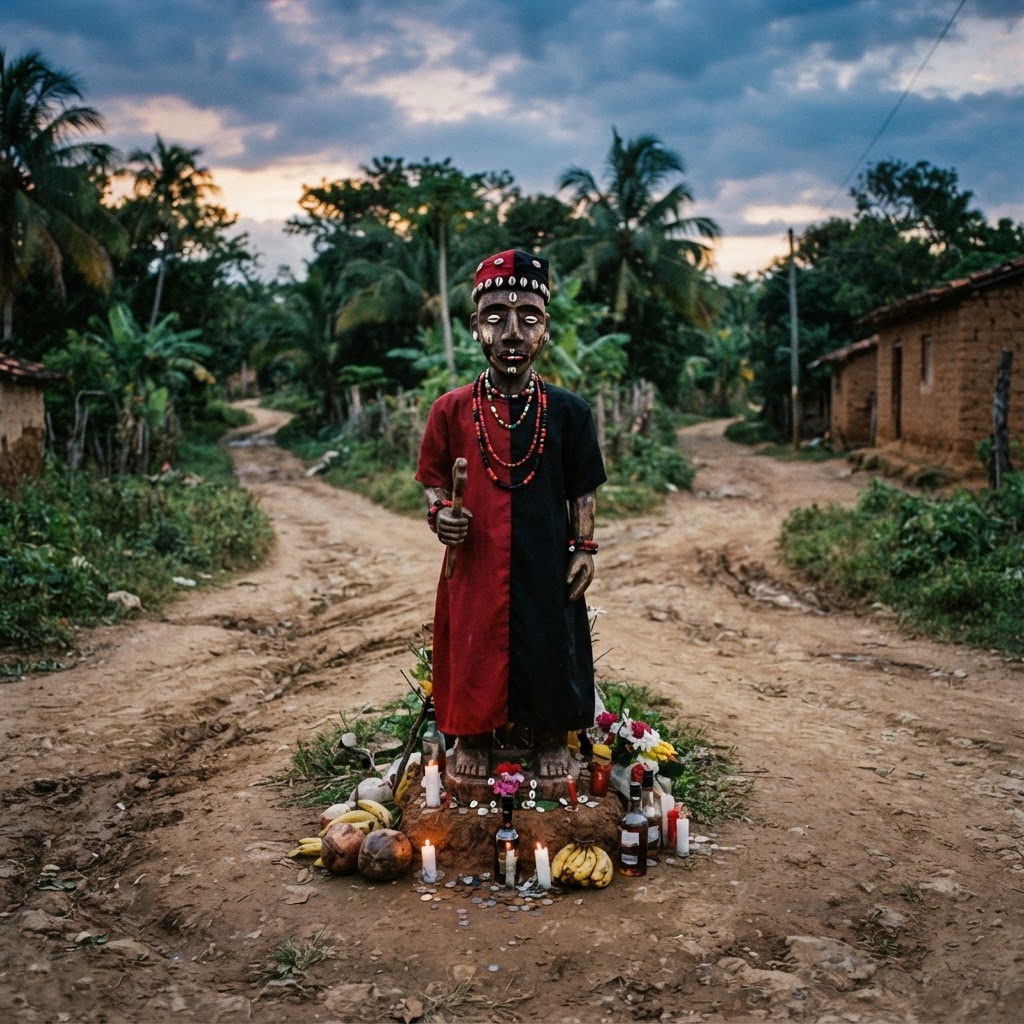
Eleguá Orisha is the first deity to whom tribute is paid in the Lucumí tradition, being the absolute owner of the roads, crossroads, and human destiny. As a messenger between the world of the Orishas and that of human beings, his role is fundamental; nothing happens on earth without his prior permission. Learning about him is the first step in Lucumí spirituality.
He is the guardian who opens or closes the doors of our prosperity, health, and spiritual evolution. Many devotees seek consecrated tools, such as a Hand-Carved Eshu Eleguá Statue, to keep his presence active in the home, always under the guidance of an initiated godparent who provides orientation on their correct use.
The colors associated with Eleguá Orisha are primarily red and black. This duality represents life and death, the beginning and the end, and the necessary balance between opposing forces that coexist in the universe. Red symbolizes blood, vital force, war, and passion, while black represents death, darkness, mystery, and the hidden knowledge of the unknown.
In practice, you will see these colors combined in necklaces, mazos, and other sacred items. For example, in our collection dedicated to Eleguá, these tones are intertwined to invoke his protective energy. It is vital to remember that these colors are not decorative, but are charged with Ashe, and must be treated with the due reverence dictated by the Lucumí tradition.
The sacred number par excellence for Eleguá is three, although he is frequently associated with one and twenty-one in various houses of Ocha. The number three is a reflection of his capacity to connect worlds and his constant presence in the balance of human situations. Devotees usually present him with offerings in groups of three units, such as candies, corn kernels, or fruits.
Regarding the calendar, his day of the week is Monday. It is an ideal day to clean his space, refresh his tools, and offer him fresh water or aguardiente. Regarding his feast day, although he is honored constantly, January 6th is a date marked by many for community celebrations, aligning with the historical syncretism that links him to the Day of the Three Kings.
Eleguá is known for his appetite and his preference for simple but significant foods. Among his most traditional dishes are "ekó" (tender corn tamale), smoked fish, jutía, and roasted corn. These offerings serve to attract his blessing and soften the paths that seem blocked before our goals.
He is also offered aguardiente (or rum) and tobacco, elements that are essential when working with his energy. If you are looking for high-quality tools for his ceremonies, consider a Handmade Maraca De Elegua to accompany chants and prayers. Always remember to consult your godparent before making any complex offering, as they know the specific needs of your personal Eshu Eleguá.
Related tools
Handmade by initiated Santeros · unconsecrated, ready for your elder
$25.00$35.00

Handmade by initiated Santeros · unconsecrated, ready for your elder
$65.00

Handmade by initiated Santeros · unconsecrated, ready for your elder
$30.00
Every piece ships unconsecrated so your elder can prepare it. Free US shipping over $95 · 14-day returns.
The throne of Eleguá is usually loaded with objects that narrate his history and power. Among these are the garabato (a guava stick in the shape of a hook), cowrie shells, sacred stones (otá), and keys. Each of these elements symbolizes his domain over the paths and his capacity to catch opportunities or remove the obstacles that slow the devotee's growth.
These objects, which are part of what initiates receive, must be treated with the utmost secrecy and respect. If you need complementary pieces for your practice, such as necklaces, you can opt for Handmade Eleguá & Eshu Collares, designed to connect with his vibration. Never forget that the use of these tools requires a prior consecration process under the guidance of a Babalawo or Babalorisha.
Today, honoring Eleguá implies more than just placing an offering; it requires living with integrity and prudence. The best way to honor him is through respect for one's word and the constant care of his space. If you have your Eleguá at home, make sure to keep it clean, free of dust, and always with fresh water nearby.
Avoid practices that do not come from the teaching of your elder. If you ever find yourself in a situation where you can no longer maintain your practice, seek guidance on the safety protocol for managing sacred items rather than improvising. Seriousness in these matters guarantees the spiritual peace of your home and your evolution on the path of Ocha.
Before you begin
What to ask before any ritual work begins — and what only an initiated elder can answer.
No spam. Unsubscribe anytime.
Everything we send is a starting point. Ritual work belongs in the hands of an initiated elder — find yours before you begin.
Tradition indicates that the day of the week consecrated to Eleguá is Monday, being the appropriate time to carry out any attention, cleaning, or special petition in his name. During this day, it is considered that his energies are more open to listening to the pleas of his children and followers, facilitating the movement of stagnant situations.
Regarding his feast day, the Lucumí tradition marks June 13th as the main date to worship him, although it is necessary to specify that this celebration usually coincides with the feast of Saint Anthony of Padua due to syncretism. On this day, devotees usually prepare large banquets, light candles, and raise prayers, seeking to ensure the development and opening of paths for the entire coming year, always maintaining an attitude of profound humility before the owner of the crossroads.
The traditional greeting to Eleguá implies the gesture of touching the ground with one's fingertips and bringing them to the forehead, symbolizing the connection between the earth, which is his natural dwelling, and the mind of the devotee. This gesture, known as "giving coconut to the ground," is performed every time one approaches his receptacle to perform a consultation or leave an offering, recognizing that he is the first in everything that happens.
In addition, when invoking his name, it is customary to perform the verbal greeting "Eshú Elewa, Ago!," which translates as a request for permission to pass and for him to intercede in daily affairs. These gestures are not mere protocol acts, but manifestations of absolute respect toward the hierarchy he holds, reminding us that without his consent, no action or project can come to a good end or receive the blessing of the other Orishas.
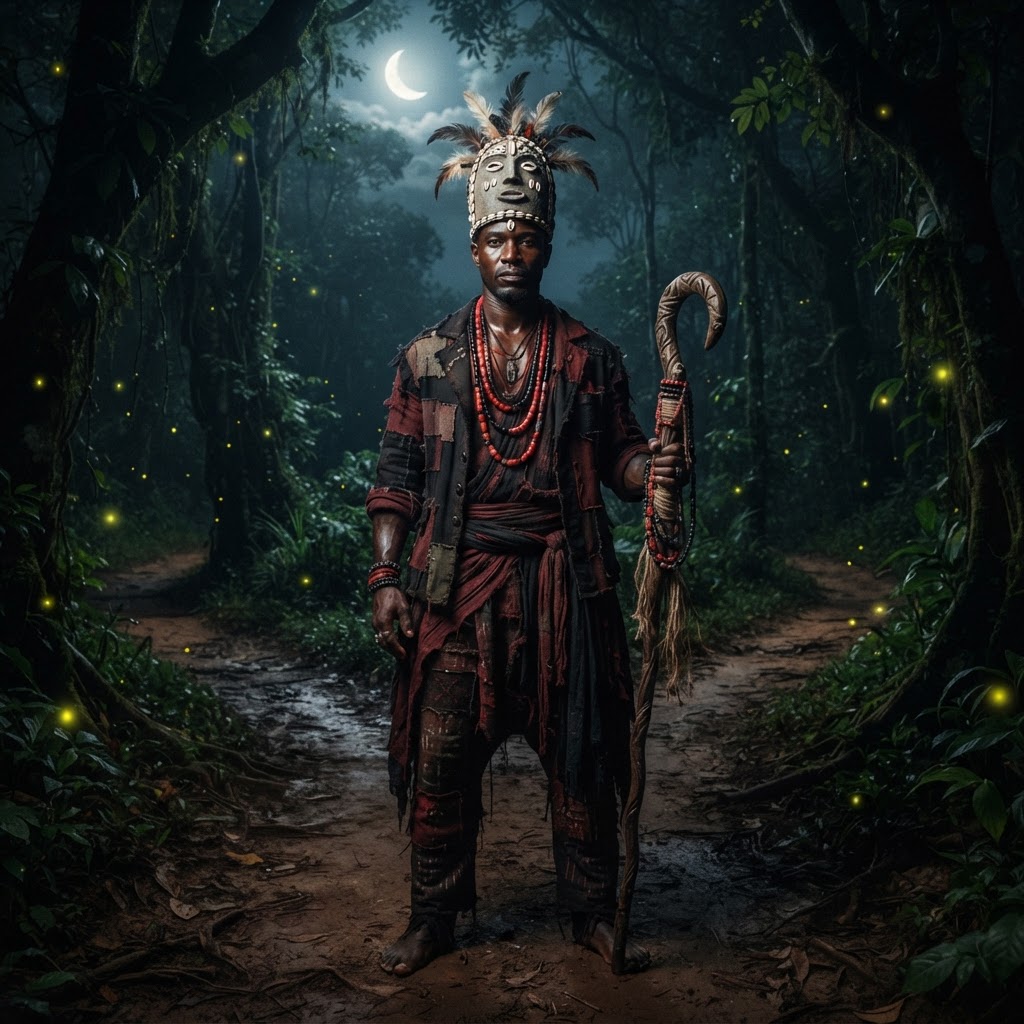
Eleguá lives fundamentally in the forest, that virgin space where nature imposes its laws and where the secrets of creation are kept under the supervision of the Orishas. For this reason, he is attributed the dominion of the paths that cross the woods.
Written by
SanteriaGuide Editorial
Initiated practitioner and writer at SanteriaGuide. Articles are reviewed by elders of the house before publication.
Before you decide
From the community
“The irofá arrived ready for work — solid, balanced, exactly as my babalawo wanted.”
Omar B. · Union City, NJ · Verified buyer
“Used the mazo in my iyawó year. It held up through everything.”
Lisette F. · Tampa, FL · Verified buyer
“Every knot tight, every bead correct. These people know the tradition.”
Rafael O. · Bronx, NY · Verified buyer
Authenticity guaranteed
Handmade by initiated Santeros using traditional materials.
Fast, careful shipping
Ships next business day, wrapped for the altar.
30-day returns
Unused, unconsecrated pieces returned without fuss.
Secure checkout
Encrypted payment, card details never stored.
Related collection · View all 13 pieces
Eshú and Eleguá elekes, mazos, ildés and pinaldos — handmade pieces in red and black, the colours of the guardian of the crossroads, the messenger between worlds and the one greeted before all others.
Keep reading